Product Guide
Turnkey Internal Mixing Line Guide: From Process Planning to Final Acceptance
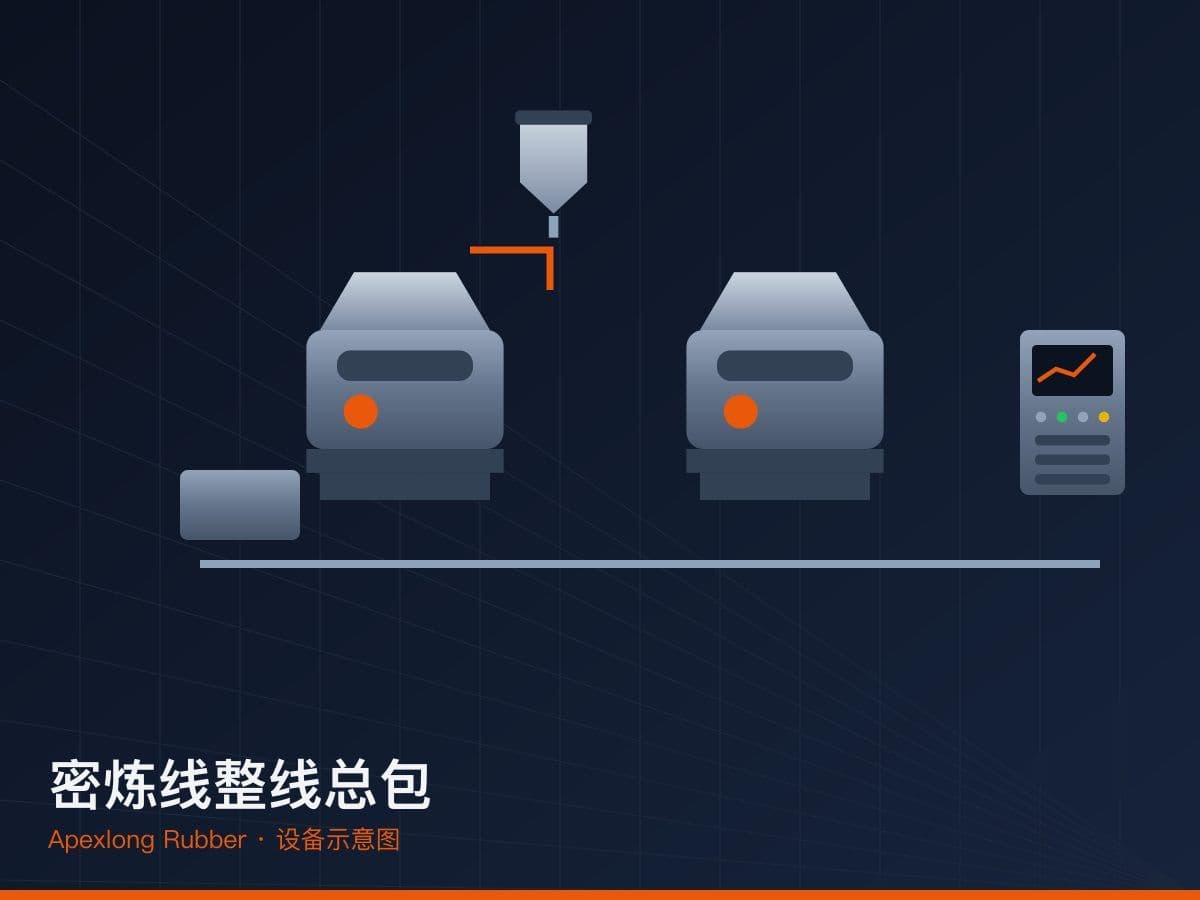
When building or retrofitting a mixing line, how does the turnkey EPC model help owners control process quality, schedule and capex? This article outlines scope boundaries, key decision points and acceptance criteria.
The mixing workshop is the heart of every tire factory and rubber goods plant, and the quality of its mixing line directly determines compound consistency for every downstream step. A growing number of owners choose the turnkey EPC model, entrusting a single contractor with process planning, equipment selection, central electrical control, installation and commissioning, so they avoid the finger-pointing typical of multi-vendor interfaces.
1. How to define the turnkey scope
A typical turnkey line package covers: banbury mixer selection (paired with mainstream builders like Yiyang and Dalian Rubber), upstream auxiliaries for conveying, weighing and charging rubber, carbon black, oils and small ingredients; small-ingredients weighing stations; downstream auxiliaries such as the extrusion sheeter and batch-off cooling line; a central electrical control system built on MCC + PLC + KingView SCADA; plus installation, commissioning and operator training. Civil works and utility hook-ups remain owner-scope, with interface conditions frozen at the design stage.
2. Five critical decision points
(1) Capacity sizing: calculate required banbury volume and quantity backwards from mixing cycle length and batch count, leaving a 15–20% safety margin.
(2) Process route: single- or two-stage mixing defines how deep upstream and small-ingredient line configuration should go.
(3) Automation level: from semi-auto to fully auto batching, you need to balance capex against long-term labor cost.
(4) IT interfaces: whether recipe and batch data must integrate with MES must be locked before the electrical controls are selected.
(5) Phasing strategy: for greenfield projects, “plan once, build in phases” controls the capex curve.
3. Acceptance checkpoints
Acceptance must never stop at dry running. Run continuous loaded tests with representative recipes, focusing on weighing accuracy, batch-cycle time, energy KPIs and traceability-data completeness. Operator training and spare-parts lists are equally valid acceptance items.
The value of a turnkey line is that it knits process, machinery and electrical controls into one rope. When selecting a contractor, prioritize mixing-process competence and a proven track record of similar projects over equipment price alone.