Product Guide
Batch-Off Cooling Line Selection: Capacity Matching and Energy Optimization
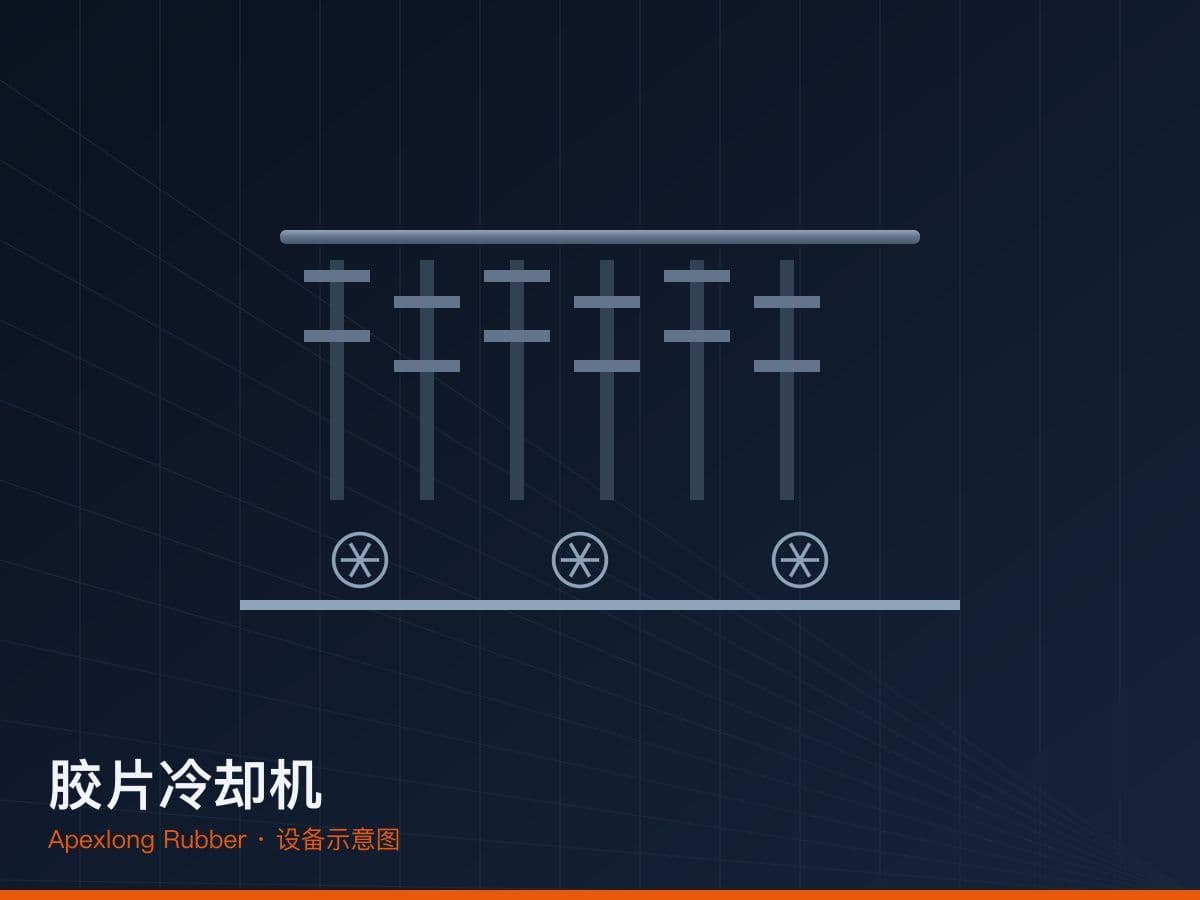
The batch-off cooling line is the most easily underestimated step downstream of a banbury. A mismatched selection can turn it into a line bottleneck or a power-consumption black hole. Here is how to size it correctly.
A batch-off cooling line sits between the banbury mixer and the next downstream process. It looks mechanically simple on the surface, but a poor selection turns it either into a hard throughput bottleneck for the entire mixing line or a power-draw black hole that silently erodes margins.
1. Capacity alignment as the golden rule
Sheet output speed on the cooling line must be tightly linked to batch weight and mixing cycle time of the banbury. The total cooling residence time of a batch on the hanging rack must never exceed the mixing cycle; otherwise the batch-off backs up with stacked sheets and the mixer sits idle waiting. Selection calculations should use the heaviest compound grade (the slowest-cooling recipe) to size the hanging-rack length and fan duty, and still keep a VFD speed margin on top.
2. Three variables that determine cooling performance
Three things jointly set the final sheet temperature: sheet thickness (dictated by the sheeter die), ambient temperature and humidity, and applied air volume and velocity. Projects in hot and humid regions need extra fan redundancy or a chilled-water pre-cooling stage. Release-agent concentration and coating uniformity matter too, because both cooling efficiency and anti-sticking performance depend on them.
3. How to save energy
Fans dominate the batch-off electricity bill. Grouped start-stop logic plus VFD speed control lets the line run at actual load, typically delivering 20–30 % energy savings compared with a fixed-speed design. For a three-shift year-round line, that saving easily justifies the VFD investment.
4. Export project checklist
Overseas projects need upfront verification of: local power frequency and voltage, required IP rating, applicable CE marking scope, safety guard / E-stop / pull-cord layouts to local standards, and HMI language plus documentation agreements before shipment.
Selection tip: always size the batch-off inside a complete line model, never in isolation. We offer custom selection calculations calibrated to your exact compound recipes and site climate.